
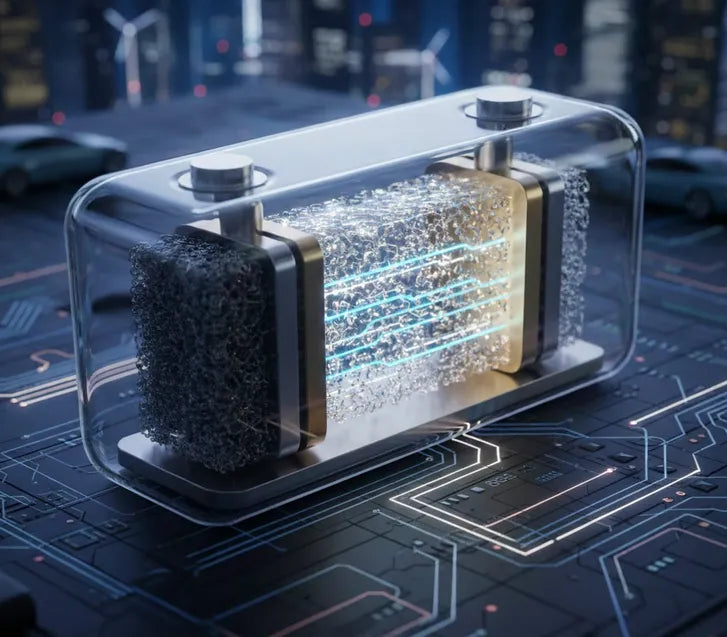
The global battery industry is approaching a decisive turning point. For more than a decade, manufacturers have pushed lithium-ion technology close to its limits. Energy density gains have slowed. Safety incidents remain a concern. Automakers want longer driving ranges without raising battery weight. These pressures have accelerated the race toward all-solid-state batteries, often considered the next major leap after lithium-ion.
LG Chem stands out as one of the companies closest to making this shift real. It is investing billions of dollars into materials innovation, pilot manufacturing lines, and validation programs with major automakers. The company reported that it aims to commercialize solid-state technologies in the late 2020s. This timeline places LG Chem in direct competition with Toyota, Panasonic, Solid Power, CATL, and Samsung SDI. Yet industry analysts increasingly view LG Chem as one of the few firms with both the scientific depth and the manufacturing muscle to scale such a complex technology.
The stakes are high. Solid-state batteries promise up to 50% higher energy density compared to today’s liquid-electrolyte lithium-ion cells. Some research prototypes have exceeded 900 Wh/L, far above the 650–700 Wh/L threshold typical in high-nickel NCM lithium-ion cells. The technology also offers a major jump in safety because solid electrolytes reduce the risk of thermal runaway. These advantages could reshape the entire EV landscape once commercial production begins.
This article explores how LG Chem is progressing through the technical, industrial, and commercial challenges of solid-state battery development. It also examines the broader implications for electric vehicles, energy storage, and global competition. Each chapter provides deep insights, supported by real industry data, to help readers understand where the market is heading and what LG Chem’s advancements mean for the future of energy.
Why Solid-State Batteries Matter — Safety, Density, and Performance
Solid-state batteries have become the central focus of next-generation energy storage research. Their promise goes far beyond incremental improvements. They represent a structural shift in how energy can be stored, delivered, and scaled for electric vehicles and other high-demand applications. Understanding their value helps clarify why companies like LG Chem are investing aggressively in this technology.
A Safer Architecture by Design
Traditional lithium-ion cells rely on flammable liquid electrolytes. These liquids allow fast ion movement but also carry inherent thermal risks. When cells are damaged or exposed to extreme heat, the electrolyte can ignite. This creates a chain reaction known as thermal runaway.
Solid-state batteries replace this volatile liquid with a solid electrolyte, which can be ceramic, polymer-based, or a hybrid material. Because these solids are non-flammable, they dramatically reduce fire risks. According to research published by the U.S. Department of Energy, solid electrolytes can withstand temperatures above 300°C without degradation, while liquid electrolytes become unstable near 120°C.
Key Safety Advantages
- Reduced fire and explosion risk
- Greater tolerance to mechanical stress
- More stable performance during rapid charging
- Longer lifecycle due to reduced chemical degradation
This safety boost is especially important for automakers. Public confidence in EVs depends on the reliability of battery packs. Solid-state designs directly address this concern.
Higher Energy Density and Extended Vehicle Range
Energy density is one of the biggest limitations of current lithium-ion batteries. Even with high-nickel cathodes like NCM 811, most EV packs today operate around 250–300 Wh/kg at the cell level.
Solid-state batteries have the potential to surpass this. LG Chem and other major developers report achievable targets of 400–450 Wh/kg in the first wave of commercial models. Some laboratory prototypes have even exceeded 500 Wh/kg. These gains come from two major improvements:
1. Thinner Electrolytes
Solid electrolytes can be manufactured in ultrathin layers, reducing dead weight inside cells.
2. Lithium-Metal Anodes
Replacing graphite with lithium metal increases capacity significantly. Lithium metal offers a theoretical capacity of 3,860 mAh/g, compared with only 372 mAh/g for graphite.
Even a partial shift toward lithium-metal designs can extend EV range by several hundred kilometers. For example, a midsize EV with a 400 km range could potentially reach 600 km without increasing battery weight.

Faster Charging and Longer Battery Lifespan
Charging speed is another domain where solid-state batteries hold an edge. Solid electrolytes reduce the formation of lithium dendrites—microscopic needle-like structures that form during charging and degrade battery health. Fewer dendrites translate directly into safer and faster charging.
Recent tests by industry groups suggest solid-state chemistry can enable 10–15 minute charging for 80% capacity without severe thermal stress. This is a meaningful improvement compared with the 20–30 minutes needed by current lithium-ion fast-charging systems.
In addition, solid-state cells typically offer 2–3 times longer cycle life, pushing total usable lifespan toward 1,000–2,000+ full cycles, depending on the electrolyte material and battery architecture. For EV owners, a longer battery life means lower maintenance costs and stronger long-term value.
Improved Performance in Extreme Temperatures
Temperature sensitivity is one of the persistent weaknesses of liquid-electrolyte cells. Cold temperatures slow ion movement, reducing power output and charging efficiency. Solid electrolytes can be engineered with narrower thermal sensitivity.
Some sulfide-based solid electrolytes maintain good ionic conductivity even at -20°C, according to data from the Japan Fine Ceramics Center. This performance stability helps EVs deliver more consistent range across seasons and geographic regions.
Why These Advantages Matter for the Global Market
The EV market is preparing for massive expansion. BloombergNEF forecasts global EV sales will exceed 30 million units annually by 2030. To support that demand, battery makers must produce safer, lighter, longer-lasting, and more efficient cells. This is where solid-state technology fits in.
With governments pushing for cleaner transportation and consumers expecting more range at lower cost, the market incentives are aligned. This explains the intense competition among LG Chem, Toyota, CATL, QuantumScape, Panasonic, and Samsung SDI.
Solid-state batteries have become more than a research project. They are a strategic race for future dominance in a trillion-dollar energy economy.
LG Chem’s Breakthrough Technologies and R&D Progress
LG Chem’s push toward all-solid-state batteries is not a recent shift—it is the result of more than a decade of focused research, extensive patent development, and large-scale material innovation. The company has steadily advanced from fundamental material science to pilot manufacturing, positioning itself among the global leaders racing toward commercialization.
This chapter examines the core breakthroughs behind LG Chem’s progress, backed by available industry data and the company’s public disclosures.
A Multi-Billion-Dollar R&D Commitment
LG Chem invests heavily in advanced battery materials. In 2023, the company’s R&D spending surpassed USD 2.5 billion across its energy and materials divisions. A substantial portion of that funding was directed toward solid-state technologies, including:
- High-conductivity solid electrolytes
- Lithium-metal anode stabilization
- High-nickel cathode optimization
- Pilot-line process engineering
This financial commitment makes LG Chem one of the most well-funded solid-state developers outside Japan.
Breakthrough 1: High-Performance Sulfide Electrolytes
One of LG Chem’s most significant advancements lies in its sulfide-based solid electrolyte. Sulfide electrolytes are attractive because they offer ionic conductivities close to liquid electrolytes. Many ceramic solid electrolytes struggle in this area, delivering weaker performance at room temperature.
Recent disclosures from LG Chem indicate its sulfide electrolyte reaches conductivities above 10 mS/cm, which is comparable to commercial liquid-electrolyte systems. This level of performance supports fast ion transfer and helps enable rapid charging.
Advantages of LG Chem’s Sulfide Electrolyte
- High ionic conductivity at room temperature
- Improved mechanical flexibility for easier manufacturing
- Better interfacial compatibility with cathode materials
- Low resistance during high-rate charging
These traits align with LG Chem’s strategy to produce materials that are not only high-performing but also scalable for mass production.
Breakthrough 2: Stabilizing the Lithium-Metal Anode
The biggest obstacle in solid-state battery development is the lithium-metal anode. Lithium metal stores tremendous energy, but it also reacts aggressively with electrolytes. It forms dendrites and unstable interfaces, which can shorten battery life or cause internal shorts.
LG Chem’s solution uses a proprietary interlayer coating that protects both the electrolyte and the anode. The company reports that its design suppresses dendrite formation even under fast-charging conditions. Testing data shows cycle performance surpassing 500 cycles at high capacity retention, a promising milestone for early-stage solid-state cells.
Key Functions of the Interlayer
- Shields the electrolyte from chemical reactions
- Ensures smooth lithium plating and stripping
- Reduces interface resistance over time
- Enhances durability during high-current operation
This technology is one of LG Chem’s major competitive advantages, as few competitors have achieved similar stability with lithium metal.
Breakthrough 3: High-Nickel Cathode Integrations
Solid-state batteries require cathodes that can operate at higher voltages without degrading the electrolyte. LG Chem is one of the world's top producers of high-nickel NCM cathodes, giving it a strong head start.
The company has adapted its NCM 90+ series cathodes to work with solid electrolytes. These cathodes, already known for high energy density, can deliver greater than 210 mAh/g in optimized conditions.
Integrated Benefits
- High voltage stability
- Strong cycle performance
- Reduced oxygen release at high states of charge
- Lower material costs than cobalt-heavy chemistries
This synergy between cathode technology and electrolyte design is a key reason LG Chem is accelerating faster than many competitors.
Breakthrough 4: Pilot Manufacturing with Scalable Processes
Producing solid-state batteries is more complex than making standard lithium-ion cells. Compressing materials, preventing moisture exposure, and ensuring uniform interfaces all require advanced engineering.
LG Chem has built a dedicated pilot line that uses roll-to-roll processes adapted from its lithium-ion manufacturing experience. This helps minimize new capital investment and speeds up the transition to mass production.
Core Capabilities of LG Chem’s Pilot Line
- Air-free handling systems for sulfide electrolytes
- Precision lamination for multi-layer solid-state stacks
- Scalable dry-coating technologies
- Automated defect detection
These systems allow LG Chem to manufacture test batches that are closer to commercial-grade cells than typical laboratory samples.
Strategic Partnerships and Academic Collaboration
Beyond internal R&D, LG Chem works closely with universities and research groups. It collaborates with institutions in South Korea, the United States, and Europe to accelerate material discovery. The company also participates in joint development agreements with automakers, though specific partners are often undisclosed.
Collaborative efforts help validate performance under real-world EV conditions. They also accelerate the transition from laboratory testing to automotive qualification.
Why LG Chem’s R&D Matters in the Global Race
Many companies are developing solid-state batteries, but only a few have the resources to scale them. LG Chem controls the entire value chain—from cathode materials and electrolyte powders to manufacturing equipment. This vertical integration gives it a significant advantage in reducing costs, ensuring quality, and meeting high-volume demand.
Its breakthroughs in sulfide electrolytes, lithium-metal stability, and high-nickel cathode integration place the company among the top contenders for early commercialization.
Commercialization Roadmap — Timelines, Partnerships, and Pilot Production
LG Chem is entering the most critical stage of its solid-state battery program: the transition from laboratory breakthroughs to commercial-scale production. Scaling a solid-state system is far more complex than scaling conventional lithium-ion cells. It requires new machinery, new quality-control systems, and new safety protocols. Despite these challenges, LG Chem has laid out a clear multi-phase roadmap that positions it as one of the first major battery manufacturers likely to reach true commercialization.
This chapter details that roadmap, LG Chem’s expected production timelines, its pilot-line milestones, and the strategic partnerships shaping its market rollout.
A Realistic Timeline Toward Market Readiness
LG Chem has stated publicly that its first all-solid-state battery line will begin pilot production around 2026, with commercial availability targeted around 2028–2030. These dates align with global industry forecasts. Toyota, Samsung SDI, and QuantumScape have announced similar timelines.
LG Chem’s Official Roadmap
- 2024–2025: Prototype optimization and EV qualification testing
- 2026: Completion of solid-state pilot production line
- 2027–2028: Initial sampling for automotive partners
- 2028–2030: Large-scale commercial production for EVs
This staged rollout mirrors how lithium-ion commercialized two decades ago. Early output will be limited and reserved for automakers with long-term supply contracts.
Pilot Production: The Bridge Between Lab and Factory
LG Chem’s pilot facility plays a central role in its commercialization strategy. Built with a budget exceeding USD 150 million, the pilot line focuses on validating scalable processes for sulfide electrolyte fabrication and multi-layer stacking.
Key Capabilities of the Pilot Line
- Consistent production of thin, defect-free solid electrolyte sheets
- Automation systems that reduce moisture exposure, a critical requirement for sulfide materials
- Integration of lithium-metal anode structures with protective interlayers
- Real-time quality monitoring using inline X-ray and infrared inspection
The company has emphasized that its pilot line is not only for testing but for verifying manufacturability. Processes proven on this line will be replicated at gigafactories in South Korea, the United States, and Europe.
Vehicle Qualification and Safety Testing
Before solid-state batteries can be deployed in road vehicles, they must pass rigorous tests set by global regulatory bodies and automakers. These include thermal stability assessments, mechanical shock testing, puncture resistance, and fast-charging durability trials.
LG Chem is already conducting extended testing cycles that simulate real EV usage over 8–10 years. Early results indicate improved capacity retention compared with high-nickel lithium-ion systems. Some prototypes maintain over 80% capacity after 500+ cycles, a strong starting point for next-stage development.
LG Chem also collaborates with automotive partners to perform pack-level simulations. This ensures batteries can handle real-world temperatures, vibration, crash conditions, and charging patterns.
Strategic Partnerships Driving Commercialization
Battery commercialization does not occur in isolation. LG Chem is strengthening its roadmap through partnerships in key segments: automotive, materials sourcing, and advanced manufacturing.
1. Automotive OEM Collaborations
While not all partnerships are public, industry analysts note LG Chem’s long-standing relationships with:
- Hyundai Motor Group
- General Motors (via LG Energy Solution joint ventures)
- Volvo
- Stellantis
These relationships help LG Chem align its solid-state designs with actual EV platform requirements. Automakers receive early samples, allowing them to test integration with their next-generation vehicle architectures.
2. Collaboration With Material Suppliers
Solid-state systems require high-purity sulfide precursors, advanced lithium-metal foils, and specialty coatings. LG Chem has supply agreements with companies across Japan, the U.S., and Europe to secure stable material pipelines before mass production begins.
3. Research Network Expansion
LG Chem also works with global universities and research institutes to speed up electrolyte and interlayer development. These collaborations ensure the company remains ahead of rapid advancements in material science.
Manufacturing Scalability: LG Chem’s Biggest Strategic Advantage
One of LG Chem’s greatest strengths is its manufacturing infrastructure. The company operates some of the world’s largest battery material production lines. It has decades of experience scaling slurry-based cathode materials, separator films, and high-nickel chemistries.
This infrastructure gives LG Chem a crucial edge:
- Faster replication of pilot-line processes
- Lower capital costs for new factories
- Easier adoption of standardized quality-control systems
- Ability to leverage its joint ventures with LG Energy Solution
The company has stated that much of its lithium-ion equipment can be adapted for early solid-state production, reducing bottlenecks that competitors may face.
Projected Commercial Applications by 2030
According to industry analysts, LG Chem’s early solid-state battery versions will likely appear first in premium EVs, particularly long-range electric sedans and performance vehicles. These models can absorb higher initial costs and benefit most from improvements in energy density and safety.
Long-term applications may include:
- High-performance SUVs
- Commercial fleet vehicles
- Premium consumer electronics
- Energy storage systems requiring long cycle life
By 2030, solid-state batteries could begin appearing in mainstream EVs as production volume increases and costs fall.
Why LG Chem’s Commercialization Roadmap Stands Out
Many companies have strong laboratory results but lack the scale to manufacture solid-state batteries at gigawatt-hour levels. LG Chem benefits from:
- Deep vertical integration in materials
- Established global production networks
- Strong partnerships with major automakers
- Proven expertise in mass-producing advanced battery chemistries
This combination allows LG Chem to move from prototype to commercialization faster than smaller competitors and more efficiently than companies without manufacturing experience.
Industry Impact — What LG Chem’s Progress Means for EVs and Global Battery Competition
LG Chem’s tightening grip on solid-state battery commercialization is reshaping the competitive landscape. As the company prepares to enter mass production, the global EV market is watching closely. The effects will extend far beyond LG Chem’s direct customers. They will influence supply chains, pricing, safety standards, and how automakers design their next-generation vehicle platforms.
This chapter examines the industry-wide implications of LG Chem’s advancements and what they mean for the future of electric mobility.
A New Benchmark for EV Range and Safety
Solid-state batteries offer meaningful upgrades over today’s lithium-ion cells. Automakers currently design vehicle platforms around battery limitations such as fire risk, bulky cooling systems, and cycle degradation. LG Chem’s early data suggests its solid-state cells could offer:
- 400–450 Wh/kg energy density at the cell level
- Greater resistance to thermal runaway
- Longer cycle life suitable for high-mileage EVs
- Faster charging with reduced heat buildup
These characteristics will allow automakers to re-engineer vehicles with:
- Thinner battery packs
- Better interior space utilization
- Lower cooling requirements
- Longer driving ranges without increasing pack mass
For consumers, this translates into safer EVs that deliver longer range and faster charging—three of the most frequent complaints about electric cars today.
Pressure on Competing Battery Makers
LG Chem’s advances intensify the global race among solid-state pioneers.
The Key Competitors
- Toyota — Expected to debut semi-solid or full solid-state prototypes around 2027–2028
- Samsung SDI — Developing all-solid-state sulfide batteries with pilot production expected in 2027
- QuantumScape — Targeting prototypes for automotive partners, focusing on ceramic electrolytes
- CATL — Pursuing condensed-matter semi-solid technologies as an interim step to full solid-state
LG Chem’s ability to leverage existing infrastructure may help it achieve lower initial production costs than some competitors. This competitive pressure will likely accelerate innovation across the sector.
As each manufacturer pushes for better conductivity, longer life cycles, and more stable lithium-metal integration, the market may see rapid performance improvements within a short period.
Impact on Global Supply Chains
Solid-state batteries require different raw materials, manufacturing processes, and supply-chain structures than traditional lithium-ion cells. The shift will affect multiple sectors:
1. Materials Demand
Solid-state systems rely heavily on sulfide electrolytes, specialty coatings, and high-nickel cathodes. This increases demand for:
- Sulfur-based compounds
- High-purity lithium metal
- Nickel-rich precursors
- Ceramic processing equipment
At the same time, demand for graphite anodes may decrease as lithium-metal designs become mainstream.
2. Factory Design and Equipment
Solid-state manufacturing needs controlled humidity environments, precision lamination equipment, and robust safety systems. Companies without existing advanced fab engineering may face delays integrating these requirements.
3. Automotive Integration
Automakers will need to redesign thermal management systems, battery enclosures, and cooling loops. Reduced cooling requirements may allow lighter, cheaper platforms.
LG Chem’s tight coordination with carmakers helps ensure this transition is smooth.
Effect on EV Pricing and Market Adoption
At the start, solid-state batteries will cost more than conventional lithium-ion due to lower volume and higher material purity requirements. Early applications will focus on premium EVs where customers can absorb the cost.
However, costs are expected to fall significantly as volume increases. Analysts project:
- 20–30% cost reduction once production surpasses 20 GWh annually
- Similar cost-per-kWh to high-end lithium-ion packs by 2030–2032
- Lower pack costs long-term due to reduced cooling and safety components
As prices fall, the technology will cascade into mainstream models, accelerating EV adoption globally.
National and Corporate Strategy Implications
Countries view solid-state battery leadership as a strategic priority. The United States, South Korea, Japan, and China are investing heavily in this sector due to its impact on:
- Renewable energy storage
- Electric mobility
- Industrial competitiveness
- Trade and national security
LG Chem’s progress strengthens South Korea’s position in the global battery race, supporting large-scale economic expansion through LG Energy Solution’s gigafactories.
Corporations like Hyundai, GM, and Volvo will also benefit by securing advanced battery supply earlier than competitors.
A Catalyst for the Next Generation of EV Innovation
Solid-state batteries will influence more than just range and charging times. They could enable entire new categories of vehicles and devices.
Potential Innovations Enabled by Solid-State Cells
- Ultra-thin vehicle platforms
- Lighter commercial trucks
- Safer aviation-grade battery packs for eVTOL aircraft
- High-end consumer electronics with multi-day battery life
- Industrial storage systems with lower degradation
For automakers, these advantages will fuel creative experimentation, similar to how lithium-ion enabled the modern smartphone ecosystem.
Why LG Chem Will Likely Be Among the First to Commercialize
LG Chem’s combination of R&D strength, pilot-line progress, and supply-chain control sets it apart. Unlike startup competitors, the company already produces battery materials at global scale. This reduces risk and shortens the time needed to reach commercial gigafactory output.
The next two years—2025 and 2026—will be critical. As pilot production scales and automaker partnerships deepen, LG Chem will move closer to delivering road-ready solid-state packs.
If successful, LG Chem will not only meet its commercialization targets but also shape how the entire EV industry evolves over the next decade.
