
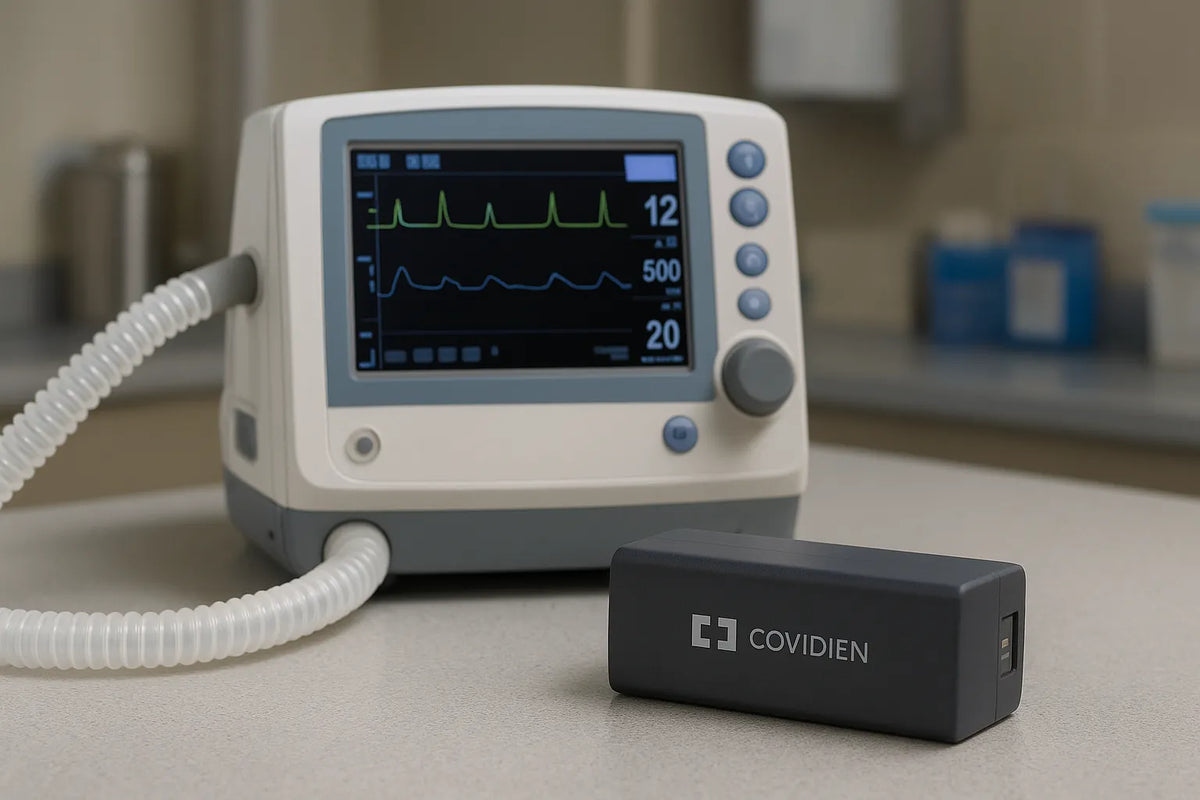
Medical devices depend on consistent and predictable power. This is especially true for equipment supported by Covidien batteries, such as ventilators, infusion pumps, and monitoring systems. These devices must perform with zero tolerance for failure, because every decision made around them directly affects patient safety. A weakened battery can reduce runtime, interrupt therapy, or trigger emergency alarms at critical moments.
Covidien batteries, like other lithium-ion and lithium-polymer medical power modules, degrade over time. Their internal chemistry changes with each charge cycle. Heat, storage conditions, and device workload also influence performance. Manufacturers typically rate these batteries for 300–500 full charge cycles, but real-world usage patterns often shorten their lifespan. Hospitals that operate equipment continuously may see more rapid capacity decline than facilities with controlled duty cycles.
The challenge for technicians and biomedical teams lies in determining when degradation crosses a threshold that impacts clinical reliability. Capacity loss rarely happens all at once. Instead, it appears gradually through shorter runtime, increased charge times, or sudden drops in voltage under load. These symptoms may seem subtle at first. Yet they point to changes inside the cell that must be addressed before they compromise patient care.
Understanding how battery degradation works allows healthcare providers to make informed decisions. It also helps facilities plan replacements before failures occur. Modern medical systems rely on stable power to ensure devices deliver accurate readings and uninterrupted operation. A proactive strategy can reduce emergency maintenance, lower equipment downtime, and support long-term budgeting for replacement parts.
This article explains the lifespan characteristics of Covidien batteries in detail. It also explores failure indicators, diagnostic methods, and evidence-based replacement guidelines. You will see the role proper maintenance plays in extending lifespan. You will also learn how data-driven monitoring can reduce risks associated with declining battery health. By approaching this topic with reliable technical information and practical insights, we aim to provide a clear reference for both clinicians and biomedical engineers.

How Covidien Medical Batteries Age: Chemistry, Cycles, and Real-World Stressors
Medical batteries degrade through predictable chemical processes. Covidien batteries, which often use lithium-ion or lithium-polymer cells, experience structural and chemical shifts with every charge cycle. These changes accumulate slowly but steadily. Over time, they reduce the battery’s ability to hold and deliver energy.
Electrochemical Aging and Cell Chemistry
Lithium-ion cells rely on reversible movement of lithium ions between the anode and cathode. This movement becomes less efficient as the battery ages. Solid electrolyte interphase (SEI) layers thicken on the anode. Cathode materials lose stability after repeated cycling. These chemical changes reduce the active material available for energy storage. As a result, total capacity falls.
Covidien batteries typically start with a nominal capacity that meets or exceeds original equipment specifications. After 300–500 full cycles, most lithium-ion cells retain 70–80% of their original capacity. This decline is normal. Capacity loss accelerates once the SEI layer becomes unstable or electrode materials mechanically degrade.
Cycle Count and Depth of Discharge
Cycle count is one of the strongest predictors of battery lifespan. Covidien batteries experience fewer full cycles in controlled hospital environments. However, frequent partial cycles can still add up.
Depth of discharge also matters. A device that drains a battery to 10% each time experiences more stress than one kept above 30%. Deeper discharge increases internal heat and speeds up electrode wear. This is why many hospitals rotate backup batteries to avoid repeated deep cycles on the same pack.
Heat: The Most Aggressive Aging Factor
Heat is the single most destructive factor in battery aging. Temperatures above 35°C can accelerate degradation dramatically. Internal temperatures rise further during rapid charging or heavy device loads. Covidien batteries in ventilators may experience increased thermal stress during prolonged use. High heat causes SEI layers to grow rapidly. It also reduces electrolyte stability.
Even modest temperature increases shorten cell life. A battery stored at 25°C ages nearly twice as slowly as one stored at 40°C. This difference matters in facilities where storage rooms lack consistent climate control.
Charge Behaviour and Long-Term Storage Effects
Incorrect charging practices also damage batteries. Overcharging increases voltage stress. Undercharging causes gradual chemical imbalance. Covidien chargers regulate these risks well. However, aging chargers or damaged connectors can introduce charging errors.
Long-term storage affects lithium-ion batteries even when idle. A cell stored at full charge degrades faster than one stored at 40–60% charge. This range minimizes internal oxidation and voltage stress. Covidien storage protocols generally recommend moderate charge levels when equipment will remain unused beyond thirty days.
Real-World Device Stressors
Hospital environments expose batteries to cycles that do not resemble ideal lab testing. Emergency use, rapid swaps, and heavy device loads introduce irregular discharge patterns. Ventilators and infusion pumps draw uneven currents depending on patient needs. These load variations increase chemical stress inside the battery.
Frequent disinfection cycles also affect battery casings and connectors. Although chemicals do not enter the battery cell, they may compromise protective seals. This can lead to moisture exposure, electrical resistance issues, or thermal inconsistencies.
Understanding Normal vs. Abnormal Aging
Normal aging follows predictable patterns. Capacity declines gradually. Internal resistance rises slowly. Charge times extend slightly over months.
Abnormal aging is different. Sudden voltage drops, swelling, or excessive heat during charging indicate internal damage. These conditions usually develop after cell contamination, high-temperature storage, or mechanical stress. Covidien batteries that show abnormal signs require immediate removal from service.
Recognizing Early and Advanced Signs of Battery Degradation
Identifying degradation early helps prevent unexpected device failures. Covidien batteries usually decline gradually. However, small performance shifts often appear long before a battery becomes unsafe. Recognizing these early signs gives biomedical teams time to act before the device fails during patient care.
Early Warning Signs: Subtle but Reliable Indicators
The earliest signs of degradation are often overlooked. A device may operate normally, yet its power performance slowly drifts.
Common early-stage symptoms include:
- Shorter runtime during standard operation
- Longer charging times despite proper charging equipment
- Small voltage drops when the device starts or increases load
- Reduced accuracy in remaining-time estimates displayed on the device
These symptoms do not always signal imminent failure. However, they indicate capacity loss beyond normal daily fluctuation. Many hospitals report runtime reductions of 10–20% during the first stages of degradation. This reduction usually appears after 150–250 cycles.
Changes in Thermal Behavior
A healthy lithium-ion battery maintains stable thermal behavior. If a Covidien battery becomes warmer than usual during charging, it may be approaching mid-stage degradation. Increasing internal resistance causes heat buildup. This heat can accelerate further aging.
A battery that feels warm even during light use is showing early signs of internal deterioration. Biomedical staff typically track thermal trends through device logs or handheld diagnostic tools.

Mid-Stage Degradation: Noticeable Operational Impact
When degradation progresses, symptoms become more obvious. Mid-stage decline affects both runtime and reliability. At this point, the battery may still function, but not consistently.
Common mid-stage signs include:
- The device switches to backup power earlier than expected
- Unexpected shutdowns under moderate load
- Fast percentage drops when the battery falls below 40%
- Increased charging frequency, even with conservative use
- Higher internal resistance, often detected during routine tests
Covidien batteries in this condition often retain only 60–70% of their original capacity. Many facilities start planning replacements once batteries enter this range.
Advanced Signs: When the Battery Becomes Unsafe
Severe degradation presents not just reliability issues but safety risks. Advanced-stage symptoms are easy to recognize and should never be ignored.
Critical signs include:
- Swelling or deformation of the battery casing
- Rapid heat buildup during charging or discharging
- Sudden voltage collapse, even at high charge percentages
- Visible leakage, corrosion, or damaged connectors
- Repeated alarms from the medical device’s power management system
A swollen battery indicates gas buildup inside the cell. This is a serious failure mode. It occurs when chemical reactions break down internal components. Any battery with visible swelling must be removed immediately.
Voltage collapse is also dangerous. A device may show 50% battery remaining, then shut down seconds later. This behavior indicates severe internal resistance or electrode damage.
Device-Specific Warning Messages in Covidien Equipment
Most Covidien-supported devices include battery diagnostics or error reporting. Ventilators, defibrillators, and infusion pumps may display warnings such as:
- “Battery Service Required”
- “Battery Not Holding Charge”
- “Replace Battery”
- “Battery Temperature High”
These messages are not based on guesswork. They rely on onboard sensors and algorithms that track voltage, temperature, charge cycles, and internal resistance. A single warning may not require immediate replacement. However, repeated warnings signal that the battery has reached a critical stage.
Why Early Detection Matters
Early detection prevents emergencies. A failing battery can cause a ventilator to reboot, an infusion pump to stop mid-delivery, or a monitor to lose data. These risks increase when degradation goes unnoticed. Scheduled testing, runtime monitoring, and staff awareness help prevent unexpected failures.
Recognizing signs early also helps facilities reduce costs. Replacing batteries before catastrophic failure protects devices from electrical stress. It also reduces downtime and emergency service calls.
Testing Methods and Performance Metrics Used in Hospitals
Accurate testing ensures Covidien batteries remain safe for clinical use. Hospitals rely on structured procedures that measure voltage stability, capacity, resistance, and thermal behavior. These tests help technicians understand real battery health instead of relying on guesswork or device warnings. Proper testing also reveals hidden weaknesses that may not appear during daily operation.
Routine Capacity Testing
Capacity testing measures how much energy the battery can deliver compared to its original specification. Technicians use analyzers that discharge the battery under controlled loads. The device records total ampere-hours delivered before the voltage reaches the safe cutoff level.
Most Covidien batteries are considered healthy if they retain 80% or more of their rated capacity. Many hospitals schedule capacity tests every six to twelve months. This schedule changes when devices enter heavy use or critical care rotations.
A significant capacity drop can signal internal aging, mechanical wear, or electrolyte degradation. Capacity tests offer the clearest picture of long-term health because they reveal the battery's actual runtime potential.
Internal Resistance and Impedance Measurements
As batteries age, their internal resistance increases. High internal resistance reduces energy efficiency and creates heat during charging. Hospitals track resistance using impedance testers or diagnostic software built into some Covidien-compatible equipment.
A resistance reading that rises sharply over a few months is a strong predictor of future failure. Many biomedical teams consider a resistance increase of 30–40% above baseline a high-risk signal. Batteries at this stage may still operate but show voltage instability under load.
Voltage Behavior Under Load
Voltage stability is crucial for medical equipment. Even a small drop can disrupt ventilator cycles or infusion pump performance. Load testing measures how the battery behaves when powering the device at typical operating currents.
Technicians may run load simulations or observe voltage changes during actual clinical tasks. Sudden voltage dips indicate weakened chemical structure or partial cell failure. These dips often appear before capacity loss becomes noticeable, making load testing valuable for early detection.
Charge Cycle Data and Diagnostic Logs
Some Covidien-supported devices track detailed battery metrics. They record cycle counts, peak temperatures, charge durations, and error events. Biomedical teams review these logs during routine maintenance checks.
Cycle count alone does not determine battery health. However, logs that show rapid cycle accumulation, repeated thermal warnings, or inconsistent charge times point to accelerated aging. Technicians often flag such batteries for additional testing before assigning them to critical-care equipment.
Thermal Performance Analysis
Temperature is a reliable indicator of internal stress. Hospitals monitor battery temperature during charging and normal operation. A healthy battery maintains consistent heat levels even at high workloads.
Technicians use infrared thermometers or built-in sensors to check for rising temperatures. A battery that warms quickly may have increased internal resistance or damaged electrodes. Elevated heat during charging often signals end-of-life conditions.
Visual and Safety Inspections
Physical inspections remain fundamental despite advances in digital diagnostics. Technicians check for swelling, discoloration, corrosion, or connector damage. Even minor casing distortions indicate internal pressure changes, which require immediate removal from service.
Covidien batteries with swollen cells pose serious safety risks. They can rupture or leak under load. Routine inspections help detect these issues before they escalate.
Discharge Time Verification on the Device
Hospitals often verify battery runtime by operating the device on battery power under normal settings. This test validates the battery’s practical performance. For example, a ventilator expected to run two hours on battery power might drop to one hour as capacity declines.
Runtime verification mirrors real clinical conditions and highlights weaknesses that controlled tests may not reveal. It also helps staff maintain accurate expectations during emergencies.
Why Testing Matters for Patient Safety
Testing ensures devices work reliably during transport, power outages, or bedside emergencies. Medical devices cannot depend on estimated values alone. Performance metrics grounded in real data prevent unexpected shutdowns, protect patients, and extend device lifespan.
Hospitals that follow structured testing programs report fewer emergency failures and more predictable battery replacement cycles. These practices support compliance with regulatory standards and minimize operational risks.

Replacement Guidelines — When a Covidien Battery Is No Longer Safe or Reliable
Knowing when to replace a Covidien battery is essential for patient safety. Degraded batteries compromise runtime, reduce device accuracy, and increase the risk of unexpected shutdowns. Replacement decisions should rely on measured performance metrics, visible wear, and institutional safety standards. Biomedical teams use a combination of diagnostic data and clinical risk assessment to determine the appropriate timing.
Capacity Thresholds That Trigger Replacement
Most facilities follow capacity-based guidelines. A Covidien battery that falls below 70–80% of its original capacity is considered near end-of-life. Although it may still power the device, its reduced energy reserve becomes unreliable during transport or emergencies.
Hospitals typically replace batteries when:
- Capacity drops below 70% during analyzer testing
- Runtime is reduced by 25% or more under normal loads
- Voltage stability becomes inconsistent during device operation
These thresholds align with manufacturer recommendations and industry best practices. Medical devices demand predictable performance, making weakened batteries unsuitable for clinical care.
Cycle Count and Degradation Rate
Cycle count provides context for performance decline. A Covidien battery may exceed 500 cycles and still operate reliably if capacity remains high and voltage stability is strong. Conversely, a battery may fail early if exposed to high heat or irregular charging patterns.
Replacement is recommended when:
- Cycle count exceeds 400–500 cycles for heavy-load devices
- Diagnostic logs show rapid cycle accumulation in short periods
- Degradation rate accelerates between testing intervals
Cycle count alone does not determine replacement, but it helps anticipate future failures. Technicians often schedule closer monitoring when a battery approaches its rated cycle limit.
Voltage Instability and Operational Risk
Voltage collapse is one of the clearest signs of internal failure. If the battery voltage drops quickly under moderate load, replacement becomes necessary even if capacity appears acceptable.
Operational signs requiring immediate removal include:
- Sudden shutdowns during high-demand tasks
- Unstable voltage at 30–50% remaining charge
- Repeated low-voltage warnings from the device
Voltage irregularities pose significant clinical risk. Devices relying on steady power—such as ventilators or syringe pumps—cannot operate safely with unstable batteries.
Thermal Issues as a Safety Indicator
Heat is a reliable predictor of end-of-life conditions. Batteries that grow warm during charging or light use show increasing internal resistance. Excess heat also speeds further degradation.
Replacement becomes necessary when:
- The battery consistently runs hotter than baseline levels
- Charging temperatures exceed normal device thresholds
- Thermal warnings appear in diagnostic logs
A battery producing abnormal heat can damage the equipment itself. Replacing it protects both the device and the patient.
Physical Damage or Chemical Instability
Any physical abnormality means the battery must be replaced immediately. Internal chemical instability presents safety hazards that cannot be corrected.
Replace the battery at once if you observe:
- Swelling or bulging of the case
- Corrosion around terminals or mounting points
- Fluid leakage or odor indicating electrolyte breakdown
- Cracks or dents from impact
Swelling indicates gas buildup inside the cell, a high-risk condition that can escalate into rupture. These batteries should never remain in service.
Error Messages and Device-Driven Replacement Prompts
Many Covidien-supported devices feature smart monitoring systems. When these systems issue warnings, they do so based on internal metrics unavailable to technicians.
Replace the battery when the device reports:
- “Replace Battery”
- “Battery Service Required”
- “Battery Not Holding Charge”
- “Battery Temperature High”
Repeated prompts indicate the system has detected performance outside safe parameters. It is best practice to act promptly instead of waiting for further decline.
Role of Clinical Use Scenarios in Replacement Timing
Replacement timing also depends on how the device is used. Equipment supporting life-critical functions demands stricter thresholds. A ventilator running on a Covidien battery during patient transport requires higher confidence than a training device used occasionally.
Hospitals adjust replacement schedules based on:
- Whether the device supports critical-care patients
- The battery’s role in life-sustaining functions
- Patterns of emergency or transport usage
Batteries supporting ICU equipment often follow tighter replacement protocols to minimize risk.
Cost Efficiency vs. Clinical Reliability
Replacing batteries early may seem costly. However, the cost of emergency failures, device downtime, or patient risk is significantly higher. Facilities that adopt proactive replacement schedules report fewer disruptions and lower long-term repair expenses. Predictable replacement cycles also simplify inventory planning and budgeting.

Maintenance Practices to Extend Battery Lifespan
Proper maintenance helps Covidien batteries remain reliable throughout their service life. Consistent handling, controlled charging habits, and routine testing reduce capacity loss and slow chemical degradation. These practices also protect sensitive medical devices from power irregularities. Hospitals that follow structured maintenance protocols report longer battery lifespan and fewer emergency replacements.
Maintain Stable Charging Habits
Lithium-based batteries age faster when exposed to extreme charge levels. Keeping the battery between 20% and 80% whenever possible reduces internal stress. This approach prevents full-charge strain and deep-discharge damage, both of which accelerate capacity loss.
Technicians should avoid storing batteries at full charge for long periods. Storing them at 40–60% is ideal if the device will remain unused. Controlled charging practices help prevent heat buildup and preserve long-term energy retention.
Reduce Exposure to Heat and Environmental Stress
Heat is one of the most significant contributors to battery aging. Even short periods of high temperature can accelerate chemical breakdown. Medical devices may generate heat during charging or heavy use, so ventilation is essential.
Hospitals can extend battery life by:
- Keeping devices away from direct sunlight
- Preventing storage in warm equipment rooms
- Avoiding sealed environments that trap heat
- Ensuring fans and vents remain unobstructed
Batteries stored at 25°C (77°F) or below show slower degradation compared to those kept in hotter environments.
Rotate Batteries in High-Demand Devices
Some clinical teams rotate batteries to ensure wear is distributed evenly across the fleet. Devices used in emergency or transport departments often cycle batteries more rapidly. Rotation prevents isolated overuse and extends the working life of every unit.
Facilities typically track usage using asset-management systems. These platforms help assign batteries evenly, ensuring no single unit absorbs a disproportionate share of high-load cycles.
Schedule Preventive Testing and Performance Audits
Routine diagnostics help detect early degradation. Hospitals that perform capacity and resistance testing every 6–12 months maintain accurate records of battery health. These audits help predict service needs and allow replacements before failures occur.
Preventive testing often includes:
- Capacity verification
- Internal resistance measurement
- Thermal performance checks
- Load-behavior analysis
- Device log review
Regular review of these metrics prevents sudden surprises and supports compliance with safety standards.
Inspect Batteries for Physical Wear
Visual inspections remain one of the most effective preventive practices. Swelling, corrosion, or distortion indicate internal stress that may not yet appear in performance tests. A quick inspection takes seconds yet prevents dangerous equipment failures.
Hospitals should check for:
- Case deformation or bulging
- Rust or residue around connectors
- Cracks in the plastic shell
- Loose or damaged terminals
Technicians typically perform visual checks during routine cleaning or device turnover.
Store Backup Batteries Properly
Backup Covidien batteries must be kept in controlled environments to maintain readiness. Incorrect storage weakens battery chemistry even if the battery is never used.
Best practices include:
- Keeping batteries at 40–60% charge during storage
- Storing in a cool, dry location
- Avoiding sealed bags that trap moisture
- Charging stored batteries every 3–4 months to prevent deep discharge
Good storage habits prevent sudden capacity drops when the battery is needed most.
Use OEM-Compliant Chargers and Accessories
Using non-OEM chargers introduces voltage irregularities and inconsistent current flow. These variations strain the battery and shorten its lifespan. Covidien and other medical manufacturers calibrate chargers to meet exact specifications. Deviating from these standards increases risk.
Facilities should use:
- OEM-certified chargers
- Manufacturer-approved cables
- Properly rated power supplies
These accessories help maintain stable charging conditions and protect device circuitry.
Train Staff on Proper Handling Procedures
Nurses, respiratory therapists, and first-response teams interact with equipment daily. Their handling habits influence battery health more than they realize. Brief training sessions help them recognize early warning signs and avoid practices that stress the battery.
Training often covers:
- How to recognize swelling
- When to report shortened runtime
- Proper charging procedures
- The importance of clean vents and cooling space
A well-informed staff contributes significantly to battery longevity.
Benefits of Proactive Maintenance
Consistent maintenance reduces breakdowns, lowers long-term costs, and ensures clinical reliability. Hospitals with proactive programs report fewer emergency failures and smoother device performance. They also maintain regulatory compliance more easily, since updated maintenance logs demonstrate responsible asset management.
These practices form a cycle of protection. Proper charging slows chemical wear. Clean storage prevents deep-discharge events. Audits catch problems early. Staff awareness prevents misuse. Together, they preserve battery health and support safe patient care.
Conclusion
Covidien batteries play a vital role in sustaining medical equipment that supports patient care. Their reliability affects every department, from emergency medicine to long-term monitoring. Understanding how capacity fades, why degradation occurs, and when replacement becomes necessary helps hospitals maintain safe and predictable device performance. Data-driven decisions ensure batteries remain dependable during critical moments.
Routine testing provides the clearest view of battery health. Capacity measurement, voltage behavior, internal resistance, and thermal tracking reveal early signs of decline. These diagnostics help technicians identify weak batteries long before failures appear at the bedside. When combined with clinical usage data, they give a complete picture of real-world performance.
Replacement decisions must prioritize safety. A battery that drops below key performance thresholds cannot deliver consistent power during emergencies. Visible damage, thermal issues, or voltage instability signal immediate end-of-life status. Acting early prevents unexpected shutdowns and reduces stress on clinical teams. Hospitals with structured replacement schedules report fewer incidents and smoother workflows.
Maintenance practices extend battery life and reduce operational costs. Stable charging habits, proper storage, and regular inspections keep internal chemistry healthier for longer. Staff training ensures early warning signs are recognized and reported promptly. These combined actions create a culture of preventive care that protects both equipment and patients.
Reliable power is central to medical safety. Covidien batteries, when well maintained, provide the foundation for consistent device performance. Hospitals that invest in monitoring, preventive maintenance, and timely replacement maintain stronger operational readiness. This commitment ensures every device performs as intended, especially when it matters most.
