
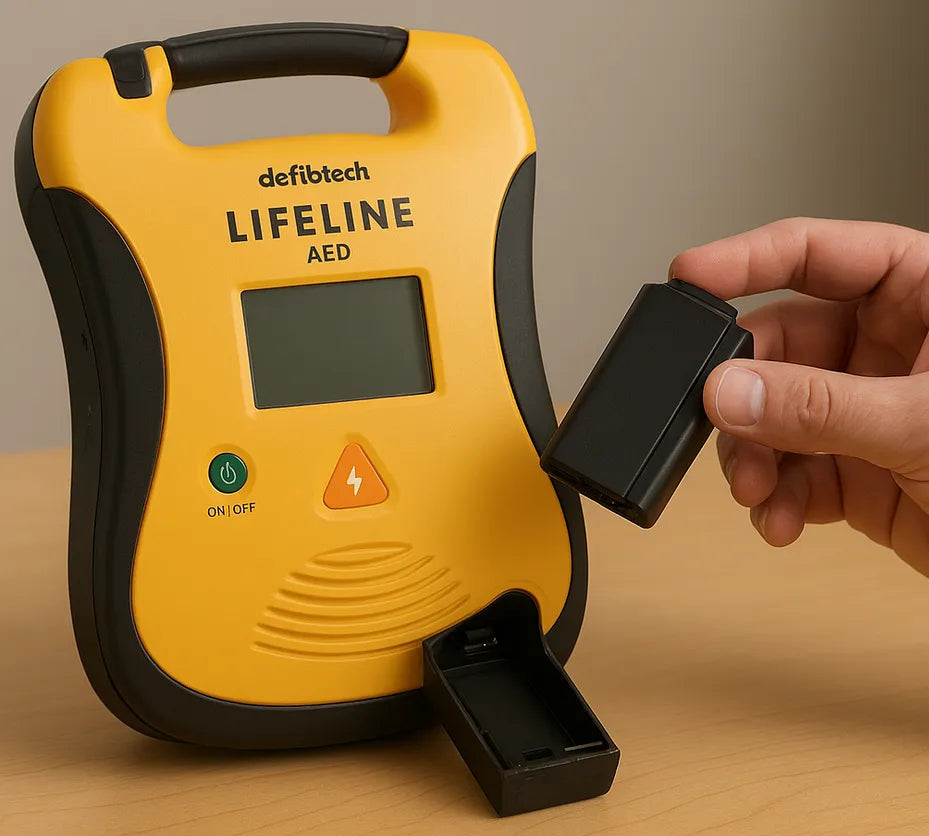
Automated external defibrillators save lives by restoring a normal heart rhythm during sudden cardiac arrest. Their reliability depends on one thing many owners overlook: battery condition. A Defibtech Lifeline AED can only deliver a shock when its battery remains within its safe operating range. Once power drops, even slightly, the device may not perform as expected.
Sudden cardiac arrest strikes more than 350,000 people in the United States every year. Survival rates double when an AED is used before EMS arrives. This makes battery readiness essential for homes, schools, offices, and public facilities. Many organizations purchase an AED but forget that its power source has a defined lifespan.
Defibtech Lifeline AEDs use long-life lithium batteries designed to stay operational for years. However, no battery lasts forever, and expiration dates are not suggestions. They are safety time limits created through rigorous testing. When the battery nears its end, the AED provides early warnings, but waiting until the final alert can place users at risk.

Understanding Defibtech Lifeline AED Battery Lifespan
Defibtech designed the Lifeline AED battery system to provide long-term reliability. The company offers two battery options, each with a different service life. The standard battery pack delivers up to five years of standby life. The high-capacity battery pack extends this to seven years. These estimates assume normal storage conditions and regular maintenance checks.
The standard battery supports about 125 shock deliveries or eight hours of continuous operation. The high-capacity model provides roughly 300 shocks or 16 hours of continuous use. These numbers come from Defibtech’s internal testing under controlled conditions. Real-world performance varies if the AED faces extreme temperatures, humidity, or poor storage practices.
Each battery includes a built-in microprocessor that tracks energy levels and internal health. The AED performs automatic self-tests to confirm battery readiness. These tests occur daily, weekly, and monthly. When the battery begins to age, the system triggers a series of early warnings. These alerts ensure the user has time to replace the battery before it becomes unsafe.
Shelf life also matters. A new, unopened Defibtech battery pack lasts up to five or seven years, depending on the model. Once installed, the countdown begins. Batteries expire even if the AED is never used, because internal chemical reactions continue over time. For this reason, you should always record the installation date and check dates during routine inspections.
For organizations with multiple AEDs, battery tracking prevents gaps in safety coverage. Simple tools, such as asset logs or digital reminders, reduce the risk of missing a replacement deadline. Because sudden cardiac arrest can occur without warning, the AED must be ready every day. Understanding battery lifespan ensures that your device remains dependable when seconds matter.

Signs Your Defibtech AED Battery Needs Replacement
Recognizing early signs of battery decline is crucial. Defibtech Lifeline AEDs are equipped with visual and audio alerts. A blinking green “OK” indicator usually signals a fully charged battery. If the indicator turns yellow or red, it is time to inspect or replace the battery immediately.
The AED also runs automated self-tests that provide status updates. During these tests, the device evaluates battery voltage, internal resistance, and readiness for shock delivery. If any test fails, the AED emits a distinct warning tone and displays a low-battery message. Ignoring these warnings can result in device failure during an emergency.
Physical signs may appear in rare cases. Swelling, leakage, or corrosion around the battery contacts indicates internal chemical breakdown. Although modern lithium batteries are designed to resist these issues, improper storage in heat, cold, or humidity can accelerate degradation. Never attempt to use a compromised battery.
A proactive replacement schedule reduces the risk of unexpected failure. Defibtech recommends replacing the battery at the first warning or before the end of the stated shelf life. Many facilities adopt a “replace one year early” policy. This precaution ensures the AED remains fully operational at all times, minimizing human risk.
Regular maintenance checks also include monitoring battery expiration dates. Even if the AED has not issued any warnings, a battery past its shelf life may not deliver the required energy. Tracking installation dates, self-test results, and manufacturer recommendations ensures optimal readiness for emergencies.

How to Replace the Lifeline AED Battery Safely
Replacing a Defibtech Lifeline AED battery is straightforward but requires attention to detail. Always use a manufacturer-approved replacement battery to maintain device reliability and warranty coverage. Using third-party batteries may reduce shock effectiveness or void certification.
Before replacement, ensure the AED is powered off and placed on a stable surface. Open the battery compartment by pressing the release latch. Remove the old battery carefully, avoiding contact with the terminals. Dispose of it according to local battery recycling regulations to prevent environmental harm.
Insert the new battery by aligning the connectors and pressing until it clicks into place. After installation, power on the AED to verify that the green “OK” indicator appears. The device may perform a self-test automatically. Confirm that no warnings or alerts are active before returning the AED to service.
Keep a record of the replacement date. Label the battery or log it in your maintenance system. Routine tracking helps prevent gaps in AED readiness. Many organizations set digital reminders for future battery checks, ensuring the device remains operational year-round.
It is also advisable to inspect electrode pads during battery replacement. Pads can expire faster than batteries, and their effectiveness is essential for delivering shocks. Replacing pads together with the battery streamlines maintenance and maintains full emergency preparedness.

Final Recommendations for Long-Term Readiness
Ensuring your Defibtech Lifeline AED remains ready for emergencies requires a proactive approach. Regularly check the battery indicator and review automated self-test results. Even a fully charged battery can degrade if stored improperly, so maintain recommended temperature and humidity levels.
Schedule routine inspections at least once a month. During each check, verify the battery indicator, confirm the expiration date, and inspect electrode pads. Document each inspection in a maintenance log. This practice not only ensures device readiness but also supports compliance with safety regulations and liability protection.
Replace the battery before the manufacturer’s recommended expiration date. A good rule is to replace one year early for high-traffic environments or locations with temperature extremes. This buffer guarantees reliability when seconds matter most during sudden cardiac arrest.
Train personnel on battery replacement procedures. Clear instructions, combined with visual aids and practice drills, reduce errors during real emergencies. Staff should also know how to interpret the device’s alerts and respond promptly to warnings.
Finally, maintain an inventory of spare batteries and electrode pads if you operate multiple AEDs. Quick access to replacements prevents lapses in coverage. Following these recommendations ensures your Defibtech Lifeline AED remains fully operational, giving you confidence in life-saving situations.
