
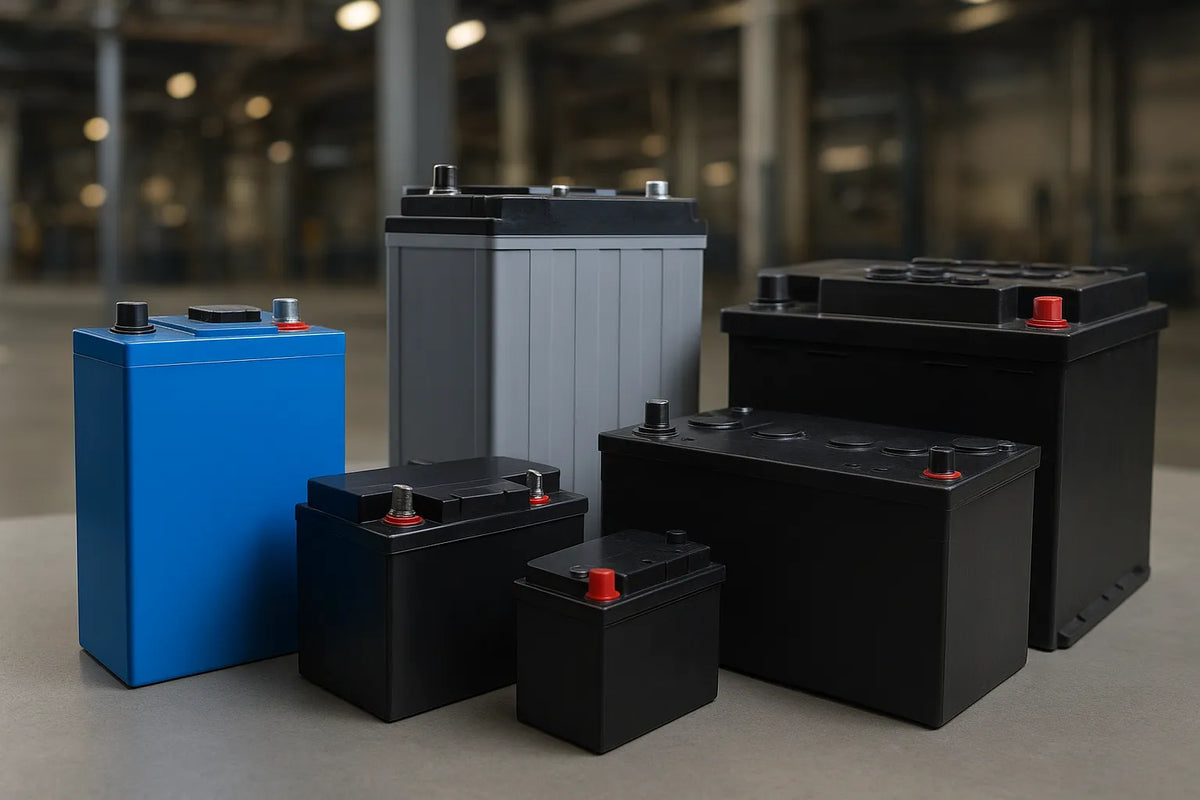
Industrial batteries power the systems that keep modern operations moving. They support factories, warehouses, medical devices, telecom infrastructure, renewable energy storage, and heavy equipment. A reliable battery ensures uptime, reduces operational risk, and prevents costly downtime. Choosing the right battery is not a guesswork process. It requires understanding usage patterns, energy demands, safety needs, and environmental conditions.
The global industrial battery market exceeded USD 20 billion in 2024, growing steadily as industries automate and electrify equipment. Energy storage demand continues to rise across logistics, healthcare, manufacturing, and renewable sectors. Many businesses upgrading their systems mistakenly pick batteries based only on capacity or price. This usually leads to shorter battery life and higher long-term costs.
Industrial batteries vary widely in chemistry, performance, safety profiles, and cycle life. Lithium-ion batteries offer longer lifespan and energy density. Lead-acid batteries remain cost-effective and easy to maintain. Nickel-based batteries deliver stable performance in harsh environments. Each type suits different operational demands. Selecting correctly matters because the wrong choice can shorten equipment life, increase power failures, or require premature replacement.
Environmental conditions also shape battery performance. High heat accelerates chemical degradation. Low temperatures reduce available capacity. Humidity, vibration, and dust can weaken connections or internal structures. Understanding operating conditions helps narrow down the right specifications. A battery must handle both peak loads and long idle periods without risk.
Safety is another major factor. Poorly matched batteries may overheat or swell. Industrial environments demand stable, tested energy storage. Many industries follow strict safety standards, like IEC, UN38.3, and UL certifications. Choosing certified and well-tested products adds an extra layer of protection for equipment and staff.
This guide explains how to choose the right industrial battery based on performance, safety, cost, and long-term reliability. You will learn the differences between major battery types, how to compare specifications, and how to match battery features to your operational needs. The goal is to simplify decision-making and provide clear, practical information based on real-world data and experience.
Understanding Industrial Battery Types
Industrial batteries come in several chemistries, each suited for specific tasks. Knowing their strengths and limitations helps narrow down the best choice. This chapter provides a clear comparison of the main battery types used in factories, energy systems, and commercial equipment.
Lithium-Ion Batteries (Li-ion)
Lithium-ion batteries dominate modern industrial applications. Their high energy density allows compact systems to deliver strong performance. They offer a long cycle life, often exceeding 2,500–4,000 charge cycles, depending on quality and depth of discharge. This makes them a preferred choice for electric forklifts, AGVs, solar storage units, and portable medical devices.
Li-ion batteries handle fast charging well. Many units reach 80% charge in under an hour. Their lightweight structure improves energy efficiency in moving equipment. While they cost more upfront than lead-acid batteries, their long lifespan and reduced maintenance often lower the total cost of ownership.
Common lithium variants include LFP (Lithium Iron Phosphate), NMC (Nickel Manganese Cobalt), and LCO (Lithium Cobalt Oxide). LFP is favored in industrial applications due to its thermal stability and safety. NMC provides higher energy density but requires stricter thermal management. Choosing between these types depends on whether the application values safety, power density, or capacity.
Lead-Acid Batteries
Lead-acid batteries have powered industrial systems for decades. They remain popular due to low cost, mature technology, and easy availability. Their energy density is lower compared to lithium batteries, but they deliver consistent performance in stable environments. Forklifts, backup power systems, and telecom cabinets often rely on them.
The two main types are Flooded Lead-Acid (FLA) and Valve-Regulated Lead-Acid (VRLA). FLA requires regular maintenance, including checking electrolyte levels. VRLA, including AGM and Gel types, is sealed and needs less attention. Most lead-acid batteries last between 500–1,000 cycles, depending on usage patterns and charging behavior.
Lead-acid batteries perform best in controlled environments. Extreme heat and freezing temperatures reduce their lifespan. They are also heavier, which can affect mobility in modern automated equipment.
Nickel-Based Batteries
Nickel-Cadmium (NiCd) and Nickel-Metal Hydride (NiMH) batteries offer durability in demanding conditions. NiCd batteries tolerate deep discharge cycles and perform well in high and low temperatures. They are common in aviation, emergency systems, and remote installations. Their cycle life ranges from 1,000–2,000 cycles, and they require less maintenance than some lead-acid options.
NiMH batteries provide a more environmentally friendly alternative to NiCd. They deliver good energy density but handle high temperatures less effectively. While not as common as Li-ion or lead-acid in large-scale industrial setups, nickel-based batteries still hold value in specialized environments.
Flow Batteries
Flow batteries store energy in external electrolyte tanks. They offer long cycle life, often exceeding 10,000 cycles. Their design makes them ideal for large-scale renewable energy storage. Flow batteries maintain consistent performance over long periods, with minimal degradation. Their main drawback is the large footprint and higher initial cost.
While not used for mobile industrial equipment, they are increasingly important in grid storage and microgrid systems.
Comparison Table
Here is a quick breakdown for easy reference:
| Battery Type | Cycle Life | Energy Density | Cost | Maintenance | Best Use Case |
|---|---|---|---|---|---|
| Li-ion | 2,500–4,000+ | High | High | Low | Forklifts, AGVs, medical, storage |
| Lead-Acid | 500–1,000 | Low–Medium | Low | Medium | Backup power, telecom, forklifts |
| Nickel-Based | 1,000–2,000 | Medium | Medium–High | Low | Harsh environments |
| Flow Battery | 10,000+ | Low | High | Low | Renewable energy storage |
Understanding these differences helps you match the right battery to your operational demands. Real-world performance depends on usage cycles, temperature control, and charging patterns. Selecting the correct chemistry improves safety, efficiency, and long-term reliability.
Key Criteria for Selecting the Right Battery
Choosing the right industrial battery requires more than checking voltage or capacity. Every application has unique demands. The wrong choice leads to downtime, frequent replacements, or safety risks. This chapter covers the core criteria businesses must evaluate before investing in a battery system.
1. Power and Energy Requirements
Start by determining the equipment’s power demand. Understand peak load, continuous power draw, and how often the system cycles. Batteries used in forklifts or AGVs need high bursts of power. Batteries used in backup or storage applications need long endurance instead of peak strength.
Energy is measured in watt-hours. The greater the stored energy, the longer the equipment can run. Underestimating load requirements results in underperformance. Oversizing increases costs without added benefit. Matching the exact power profile ensures efficiency and longevity.
2. Cycle Life and Depth of Discharge
Cycle life shows how many charge cycles the battery can handle. Depth of discharge (DoD) affects lifespan. Lithium batteries often tolerate deeper discharge compared to lead-acid. Lead-acid performance drops sharply with repeated deep cycles.
If your application runs 24/7, select a battery with a long cycle life. For standby systems, cycle count matters less than stability and reliability. Choosing a battery designed for the expected daily usage pattern avoids premature wear.
3. Environmental Conditions
Temperature swings affect battery health. High heat accelerates chemical breakdown. Cold environments reduce capacity. Dust, vibration, and moisture can damage internal components.
Industrial batteries should be matched to real-world conditions, not ideal specifications. Outdoor installations need weather-resistant casings. Factory floors with high vibration require reinforced structures. Temperature-controlled rooms extend battery lifespan and reduce thermal stress.
4. Charging Speed and Charging Infrastructure
Fast charging improves workflow efficiency. Many lithium-ion systems support rapid charging without significant heat buildup. Lead-acid batteries often need longer charging periods and cooldown cycles.
Before selecting a battery, check if your facility can support the required charging infrastructure. Upgrading electrical systems may be necessary. Improper chargers shorten battery life or cause overheating. Always use recommended chargers from the battery manufacturer.
5. Safety and Certification Standards
Safety must never be overlooked. Certifications such as UL, CE, UN38.3, and IEC standards confirm the battery has passed rigorous testing. Look for thermal protection, short-circuit prevention, and internal monitoring systems.
Lithium batteries require advanced Battery Management Systems (BMS). A reliable BMS prevents overcharging, overheating, and rapid degradation. In high-demand environments, safety features reduce the risk of accidents and extend operational stability.
6. Total Cost of Ownership (TCO)
The cheapest battery is not always the best value. Calculate total cost of ownership rather than initial price. TCO includes battery lifespan, maintenance needs, charging efficiency, energy costs, and replacement cycles.
Lithium-ion batteries cost more upfront but often last longer, reducing replacement frequency. Lead-acid batteries are affordable but may require regular maintenance. Choosing based solely on price can increase long-term expenses.
7. Compatibility and Integration
Some applications require custom connectors, communication protocols, or voltage compatibility. Always check compatibility with existing systems. Mismatched equipment causes operational delays or safety risks.
Integration matters more when using smart equipment or automated machines. A battery that communicates with equipment improves performance and efficiency.
Choosing the right industrial battery requires balancing performance, safety, cost, and real-world usage demands. A careful evaluation of these criteria ensures strong reliability and consistent energy output.
Real-World Applications and Matching Battery to Industry Needs
Every industry has different operational requirements. The correct battery choice depends on application type, usage pattern, safety expectations, and working environment. This chapter provides clear examples to help match batteries to real-world conditions.
Manufacturing and Factory Equipment
Manufacturing environments require reliable power for machinery, conveyor systems, robotics, and automated guided vehicles. Lithium-ion batteries perform well here due to their long life cycle and fast charging. Their lightweight structure supports mobility. Their BMS ensures consistent performance in high-demand operations.
Lead-acid batteries are still used in older systems but need more maintenance. Many factories are upgrading to lithium due to reduced maintenance time and better energy efficiency.
Warehousing and Logistics
Forklifts, pallet movers, and warehouse robots rely heavily on energy storage. Lithium-ion batteries are ideal because they support opportunity charging. Workers can charge during short breaks without damaging the battery. This improves workflow and reduces downtime.
Lead-acid batteries remain common in many warehouses. They perform adequately but have longer charging times. Their lower cost makes them appealing for facilities with predictable schedules. However, maintenance remains a recurring task.
Telecommunications and Data Centers
Telecom towers require stable backup systems. Batteries must remain reliable during power interruptions. In this sector, VRLA and lithium batteries are widely used. Lithium offers longer lifespan and reduced space. VRLA is preferred for predictable backup cycles.
Data centers need dependable power to prevent disruptions. High-temperature tolerance, safety certifications, and long cycle life are essential. Lithium systems provide superior density, saving floor space and reducing cooling demands.
Healthcare and Medical Devices
Medical equipment demands precision and safety. Devices such as infusion pumps, patient monitors, wheelchairs, and imaging systems rely on batteries. Lithium batteries offer stable voltage output and long lifespan. Their reduced weight helps enhance device portability.
Regulatory compliance matters greatly in this sector. Certified batteries with proven safety records reduce risks. Battery failure in medical environments can compromise patient care, making reliability a top priority.
Renewable Energy Storage
Solar and wind systems need efficient energy storage to manage fluctuations. Lithium batteries offer high density and excellent efficiency. Flow batteries are ideal for large-scale installations due to long cycle life and stable discharge rates.
Lead-acid batteries are used in small, low-budget solar setups. Their performance drops in high-temperature environments without proper cooling. Lithium provides better long-term value for most renewable projects.
Emergency and Remote Installations
Remote systems such as oil field sensors, offshore platforms, and emergency communication systems need dependable batteries that tolerate extreme conditions. Nickel-based batteries, especially NiCd, thrive here due to durability and wide temperature tolerance.
While lithium batteries are efficient, they may need strict thermal management. Nickel-based batteries handle freezing temperatures and high heat without losing stability. This makes them suited for harsh and unpredictable environments.
Maintenance, Safety, and Life-Cycle Considerations
Proper maintenance and safe handling extend battery lifespan and protect equipment. Industrial batteries operate under significant stress. Without the right care, even high-quality batteries degrade quickly. This chapter covers essential maintenance practices, safety measures, and life-cycle factors every facility should manage.
Routine Inspection and Monitoring
Routine checks help identify issues early. Inspect terminals, cables, and casing for corrosion or damage. Look for swelling, leaks, or unusual heat. These symptoms often indicate internal stress.
A Battery Management System (BMS) is essential for lithium-based batteries. It delivers real-time data, including voltage, temperature, and charge status. Monitoring ensures the battery functions within its safe operating range. Regular inspection reduces unexpected failures.
Proper Charging Practices
Charging impacts battery longevity. Avoid overcharging or charging in extreme temperatures. Use manufacturer-recommended chargers. Fast charging can stress certain chemistries, particularly lead-acid.
Lead-acid batteries require equalization charging. This helps prevent sulfation and ensures consistent performance. Lithium batteries need precise charging control, which the BMS manages. Good charging habits prevent performance loss and extend battery life.
Temperature Control and Ventilation
Heat is a major enemy of battery health. High temperatures accelerate chemical degradation. Cold environments reduce output and slow reactions. Provide proper ventilation for batteries that generate heat during charging.
Lithium-ion packs need stable thermal conditions. Lead-acid batteries release gases during charging and require ventilation. Temperature management improves safety and performance across all chemistries.
Handling, Storage, and Safety Compliance
Industrial batteries should be stored in clean, dry areas. Avoid exposing them to direct sunlight or heavy vibration. Follow industry standards such as UL, CE, and UN38.3. Compliance ensures the battery has passed essential safety testing.
Use protective gear when handling batteries, especially lead-acid. Electrolytes are corrosive. Proper training is important. Unsafe handling increases the risk of leaks, fires, or equipment damage. Safety procedures protect both workers and machinery.
Life-Cycle Planning and Disposal
Battery replacement planning prevents downtime. Track performance metrics such as charge retention, cycle count, and temperature patterns. Knowing when a battery is reaching the end of life avoids sudden failures. Many businesses implement predictive maintenance systems for this reason.
Disposal must follow environmental regulations. Lead-acid batteries are widely recycled. More than 95% of lead-acid components can be reused. Lithium recycling is improving. Many countries now require proper handling to prevent contamination. Safe disposal aligns with sustainability goals and reduces environmental impact.
Conclusion
Choosing the right industrial battery is a strategic investment. A well-matched battery improves efficiency, reduces long-term costs, and enhances operational reliability. Understanding the differences between battery types, evaluating performance needs, and ensuring proper maintenance all contribute to a safer and more productive environment.
This guide provides a practical and structured approach to selecting and managing industrial batteries. With the right knowledge and planning, businesses can optimize battery performance and ensure long-lasting value.
