
Gaming controllers have evolved far beyond their simple beginnings. From the first wired joysticks to today's wireless marvels, power management has remained a critical aspect of design. Players expect seamless gameplay, minimal downtime, and intuitive charging solutions.
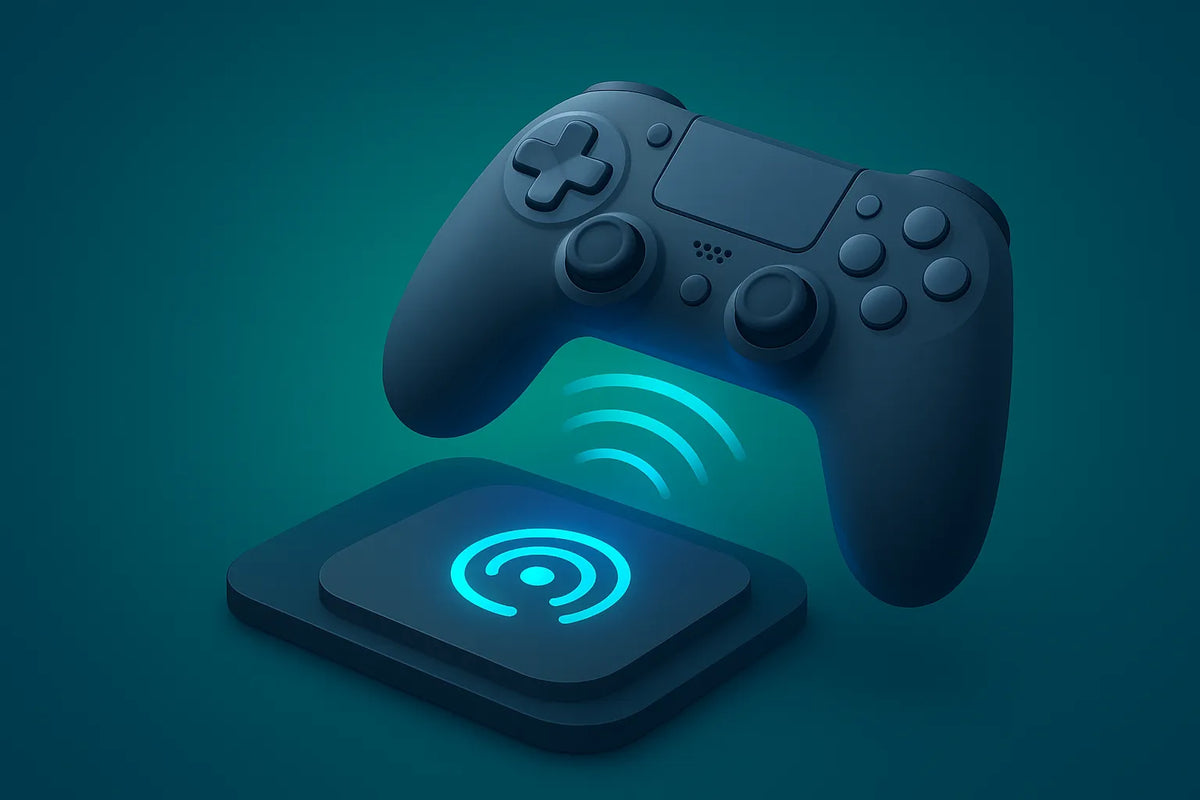
Inductive charging, also known as wireless charging, is beginning to redefine how controllers are powered. This technology allows devices to recharge without cables, offering convenience and reducing wear on ports. It also opens doors for continuous power solutions integrated into gaming environments.
As gaming hardware advances, manufacturers are exploring next-generation power sources. Innovations include ultra-efficient batteries, energy-harvesting technologies, and smart charging ecosystems. These developments aim to enhance playtime, improve ergonomics, and reduce environmental impact.
Understanding the trajectory of controller power is essential for gamers, developers, and hardware designers. This article examines the current landscape, explores emerging technologies, and forecasts how these advancements will shape the future of interactive entertainment.

The Evolution of Gaming Controller Power
The history of gaming controllers is closely linked to power innovations. Early consoles, such as the Atari 2600 and NES, relied entirely on wired controllers. These devices drew power directly from the console, leaving no need for internal batteries. While reliable, wired designs limited player mobility and led to cable clutter.
The transition to wireless controllers in the late 1990s marked a turning point. Nintendo’s WaveBird and Sony’s DualShock 2 introduced RF and infrared communication, powered by disposable batteries. Players appreciated the newfound freedom, but battery life became a critical concern. Disposable AA or AAA batteries often lasted only a few hours, interrupting gameplay and creating additional costs.
Rechargeable batteries soon became the standard. The Xbox 360 controller featured built-in NiMH battery packs, while PlayStation later adopted lithium-ion solutions. Rechargeable designs offered longer playtime and convenience, but charging remained a manual task. Players had to connect controllers via USB or use dedicated charging docks, which could be cumbersome during extended gaming sessions.
Despite improvements, traditional charging methods have inherent limitations. Wear on charging ports, tangled cables, and interruptions in gameplay still frustrated users. These challenges set the stage for the adoption of inductive charging, which aims to eliminate manual connection entirely and streamline the player experience.
Understanding this evolution highlights a clear trend: controllers are moving toward smarter, more seamless power solutions. The shift from wired to wireless, disposable to rechargeable, and manual to inductive charging reflects both technological advances and the increasing expectations of modern gamers.

Inductive Charging – Principles, Benefits, and Challenges
Inductive charging, commonly known as wireless charging, uses electromagnetic fields to transfer energy between a charging pad and a device. Inside the controller, a coil receives power from a corresponding coil in the charging station. This eliminates the need for physical connectors and reduces wear on ports.
One of the key benefits of inductive charging is convenience. Gamers no longer need to plug in cables repeatedly, which enhances continuous play. It also supports more seamless setups in living rooms, gaming desks, or even public gaming hubs, allowing controllers to recharge simply by resting on a pad.
Another advantage is the reduction of mechanical failures. Traditional USB ports are prone to damage after repeated use. Wireless charging removes this wear-and-tear, extending the lifespan of controllers. Additionally, some systems offer smart charging, which stops the energy flow when batteries are full, protecting the battery from overcharging.
Despite its benefits, inductive charging faces challenges. Energy transfer is generally less efficient than wired charging, which can result in longer recharge times. Controllers must also be carefully aligned on the charging pad, limiting flexibility. Moreover, integrating coils and circuitry adds slight weight and cost to the device.
Major manufacturers are actively improving these technologies. The Xbox and PlayStation ecosystems are experimenting with faster, more efficient pads and better alignment guides. Some prototypes even explore charging while in use, promising the possibility of continuous play without interruptions.
Inductive charging represents a crucial step toward fully seamless power solutions. While not yet perfect, it demonstrates how controller design is evolving to match the expectations of modern gamers for convenience, durability, and efficiency.
Emerging Power Technologies in Gaming Controllers
The future of controller power extends beyond inductive charging. Researchers and manufacturers are exploring energy-harvesting technologies. These systems convert motion, heat, or even ambient light into electrical energy, supplementing or replacing traditional batteries. For example, small kinetic modules can recharge a controller while players move or interact with it physically.
Battery technology is also evolving rapidly. Modern controllers are shifting toward high-capacity lithium-ion and lithium-polymer cells. These batteries offer longer playtime, lighter weight, and improved charge cycles compared to older NiMH packs. Some prototypes integrate modular battery systems, allowing players to swap units quickly during long gaming sessions.
Smart energy management is another key advancement. Controllers now feature microcontrollers that monitor usage patterns and optimize power distribution. This includes features like adaptive power scaling, which reduces energy consumption when idle, and predictive charging that anticipates peak gaming times.
Environmental sustainability is driving innovation as well. Companies are designing controllers with recyclable battery packs and low-power electronics to minimize waste. Energy-efficient designs not only reduce carbon footprints but also respond to growing consumer demand for eco-friendly electronics.
Finally, wireless power ecosystems are becoming more integrated. Future gaming setups may feature controllers that charge automatically on gaming surfaces, desks, or even furniture equipped with embedded power transmitters. This could enable uninterrupted gameplay and transform how players interact with their hardware.
Emerging power technologies promise a future where controllers are lighter, longer-lasting, smarter, and more environmentally conscious. These innovations will redefine expectations for both casual and professional gamers.

The Future of Controller Design and Player Experience
The future of gaming controllers is closely linked to how power solutions evolve. Inductive charging, energy-harvesting technologies, and advanced batteries will redefine ergonomics, usability, and immersion. Gamers can expect devices that require less maintenance and allow longer, uninterrupted sessions.
Design will become more seamless and integrated. Controllers may feature minimal physical ports, lighter frames, and smarter battery placement. Combined with wireless power surfaces, players could pick up a controller and start playing immediately, without worrying about charging or downtime.
Power innovations will also impact competitive gaming. Reduced interruptions, consistent responsiveness, and precise energy management will enhance performance for professional esports players. Smart controllers may even adapt power output dynamically, balancing performance and battery life depending on gameplay intensity.
Sustainability and modularity will shape the next generation. Recyclable materials, swappable batteries, and energy-efficient electronics will become standard. Gamers will have options to upgrade components without replacing the entire controller, promoting both longevity and environmental responsibility.
Ultimately, the convergence of convenience, efficiency, and smart technology will transform how players experience gaming. Controllers will not only serve as input devices but also as intelligent, adaptive tools, seamlessly powering the next era of interactive entertainment.
Conclusion
Controller power has come a long way—from wired joysticks to wireless, rechargeable designs, and now to inductive and energy-harvesting technologies. Innovations in battery technology, smart energy management, and wireless charging ecosystems are redefining player expectations.
The future promises controllers that are more convenient, durable, eco-friendly, and integrated into everyday gaming environments. By embracing these advances, the gaming industry is shaping a seamless, uninterrupted, and immersive player experience.
